Good morning…
In Waking Up to This Day, Paula D’Arcy shares transformative truth: “Catherine of Siena writes, ‘My deepest me is God.'” (16)
“When we see something as it is, the breaking of the shell begins,” Paula explains. “My friend Flynn reflects, ‘Even to look at an iris and think, “Such a beautiful flower,” is already expressing an opinion.’ As long as we relate to things indirectly, as ideas, we see through filters of hope, expectation, opinion, point of view, etc. But looking through a filter is not the same as simply seeing what’s there: seeing the flower. Or looking at and seeing the person sitting across from us without an obscuring judgment. Just seeing: seeing the mountain, the river, our partners and co-workers, the earth, our children. Seeing what is just as it is.” (19)
“One source gives rise to life and is embedded in life,” Paula continues in the next paragraph. “Everything that’s alive is a revelation of this presence. That is why the mystics and poets insist that there is no separation, and why they write about one spirit in all creation. Johannes Metz says, ‘Our power and strength are derived from the wellspring of invisible mystery.’ Paul of Tarsus writes, ‘In him we live and move and have our being’ (Acts 17:28). The seers recognize that our deepest nature is unencumbered, and that in knowing that, we are able to live increasingly unafraid.” (20)
“Hampered by ego, we do not effortlessly know our deepest nature and do not express it with freedom,” writes Paula. “There are many false beliefs to unmask before we see more clearly. We grow up believing that we are our personalities, our occupations, our gender or race – the roles we play. We look at our bodies and say, this is me. But all of these are either attributes of human nature or experiences we’ve had, but not who we most deeply are. The truth of us still lies hidden.” (20-21)
Like I said, Paula D’Arcy shares transformative truth. “Catherine of Siena writes, ‘My deepest me is God.'” (16)
As I try to comprehend what Paula is saying, I begin to identify the multifaceted layers that make up each one of us.
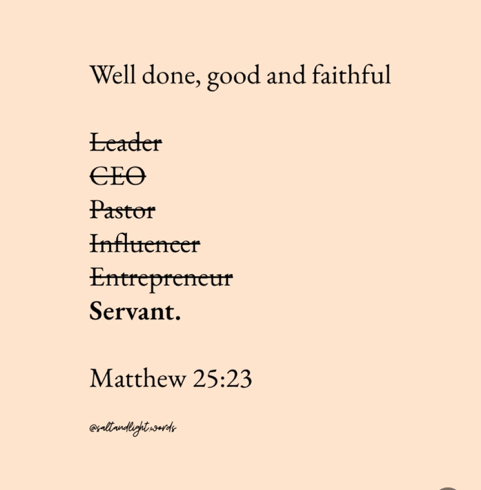
We live beneath our outer shell, filtering real life through our ideas, our hopes, our expectations, our opinions, our point of view. Casting obscuring judgements, we are hampered by ego. We each have false beliefs to unmask; since childhood we’ve been taught that we are our personalities, our occupations, our gender/race, our bodies, the roles we play. These layers are not who we most deeply are.
The deepest me is God. The deepest you is God. God, one source, gives rise to life and is embedded in life. Everything that’s alive is a revelation of this presence.
The Apostle Paul rose to his feet in the the middle of the council in Athens, to share a timeless, true message. “The God who made the world and everything in it, this Master of sky and land, doesn’t live in custom-made shrines or need the human race to run errands for him, as if he couldn’t take care of himself. He makes the creatures; the creatures don’t make him. Starting from scratch, he made the entire human race and made the earth hospitable, with plenty of time and space for living so we could seek after God, and not just grope around in the dark but actually find him. He doesn’t play hide-and-seek with us. He’s not remote; he’s near. We live and move in him, can’t get away from him!” (Acts 17:24-28, MSG).
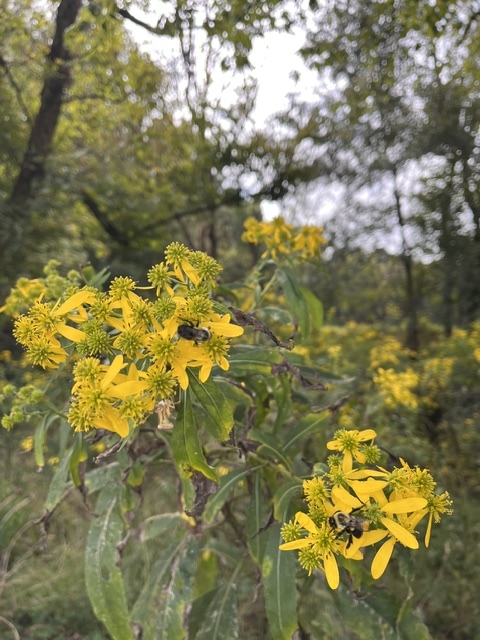
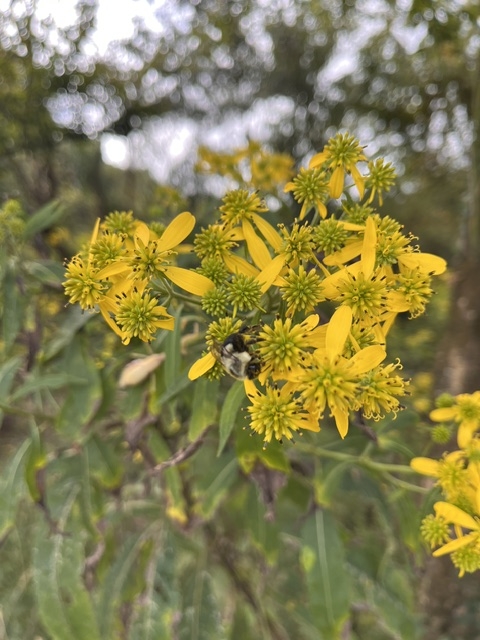
When we non-judgmentally see something as it truly is – the goldenrod, the bee, the person right in front of me – the breaking of our shell begins.
…Sue…